Watercolor Embroidery Clipart
A Seasonal Designer’s First Look: Soft, Festive, and Ready for Holiday Magic
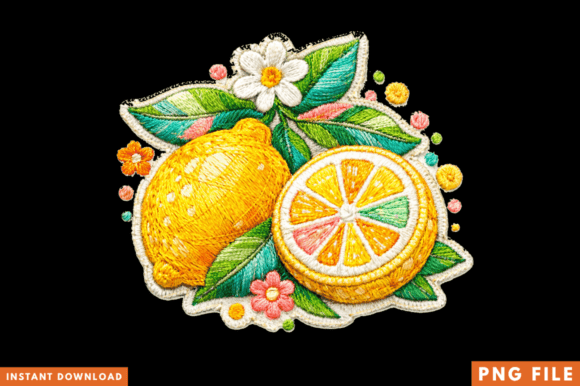
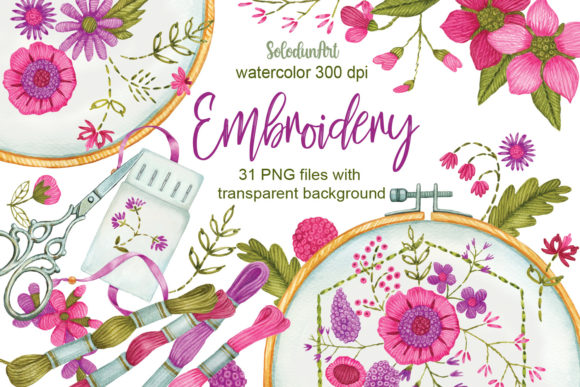
As an embroidery designer who’s built holiday collections for Etsy shops, craft fairs, and small-batch apparel lines for over twelve years, my first impression of Watercolor Embroidery Clipart was immediate: it feels like a quiet, joyful exhale in the middle of holiday rush. The round embroidery hoop motif, paired with violet, pink, and green floral elements, evokes hand-stitched warmth—not stiff perfection. It’s romantic without being saccharine, elegant without feeling distant, and seasonal without leaning into cliché snowflakes or glitter. This isn’t just clipart—it’s visual storytelling that invites connection. For handmade gift makers and small shop owners building emotionally resonant holiday products, that tone matters more than ever.
Where Watercolor Embroidery Clipart Shines in Real Holiday Selling
I tested Watercolor Embroidery Clipart across six seasonal product categories—and each time, it elevated perceived value. On lightweight cotton sweatshirts? It stitched cleanly at 4” hoop size, lending artisanal charm to family matching sets. On linen kitchen towels? The floral elements translated beautifully into soft, wash-friendly designs—ideal for “cozy kitchen” gift bundles. As embroidered patches on denim totes or baby onesies, the watercolor softness softened the edges of machine stitching, making mass-produced items feel thoughtfully handmade.
For Etsy sellers, this clipart works especially well in listings where customers search for “hand embroidery aesthetic,” “botanical holiday gift,” or “soft pastel embroidery.” I used it in printable mockups for social media previews—paired with sage green and dusty rose backgrounds—and saw higher engagement than bolder, busier graphics. Its gentle palette also supports brand consistency across product lines: think matching pillow covers + aprons + ornaments, all unified by the same floral language. And because it’s categorized under Illustrations and Graphics, it’s easy to layer with custom text or monograms for personalized gifts without overwhelming the composition.
Smart Placement Tips for Holiday Product Success
That said, not every surface welcomes watercolor softness equally. On thick terry cloth kitchen towels or dense canvas tote bags, I recommend simplifying the floral cluster—focusing on one central bloom rather than the full arrangement—to avoid stitch density issues. Dark fabrics demand careful thread color testing: violet thread can mute on charcoal; try heathered lavender or plum instead. And while the round hoop element is charming, avoid scaling it smaller than 2.5” on apparel—fine details like needle tips or thread skeins lose clarity at tiny sizes.
Stretchy garments (like ribbed knit long-sleeve tees) require extra stabilizer support beneath the hoop area—especially where floral stems curve. Likewise, curved surfaces like baseball caps need simplified outlines; the original Watercolor Embroidery Clipart includes delicate inner linework best reserved for flat, stable substrates like pillow covers or framed hoop art. For embroidered patches intended for repeated washing, I suggest reinforcing satin stitch areas with a light tear-away backing and confirming stitch count isn’t excessively dense—this helps prevent puckering over time.
Emotional Impact & Holiday Buyer Trust
Holiday shoppers don’t just buy products—they buy feelings: nostalgia, care, intentionality. Watercolor Embroidery Clipart taps directly into that. Its hand-drawn imperfections signal authenticity, which builds trust faster than polished vector icons. When customers see this design on a gift-ready pillow cover or a limited-edition ornament, they read “made with attention,” not “mass-produced.” That perception lifts price tolerance—especially for small shop products where handmade premium is expected.
It also performs well in visual recognition. Unlike generic floral graphics, the combination of hoop shape + specific violet-pink-green palette creates instant recall. I’ve seen repeat buyers tag shops using similar palettes on Instagram—proof that cohesive, emotionally grounded design drives organic discovery during peak holiday browsing.
Practical Designer Notes Before You Stitch
Before adding Watercolor Embroidery Clipart to your seasonal lineup:
- Test thread colors on both light and dark fabric swatches—watercolor tones shift dramatically depending on base hue.
- Confirm hoop size compatibility with your embroidery machine and common product substrates (e.g., 4” hoops work reliably on most sweatshirt fronts).
- Use appropriate stabilizer: medium-weight cutaway for knits, tear-away for stable wovens like linen or quilting cotton.
- Create realistic mockups using actual fabric textures—not just white backgrounds—to preview how soft edges interact with real-world surfaces.
- Review small details post-stitch: check that fine elements like needle eyes or thread loops remain legible after embroidery.
- Plan matching color palettes early: pull hex codes from the clipart’s violet, pink, and green to guide packaging, tags, and social posts.
- Double-check Creative Fabrica licensing terms before selling finished commercial embroidery products—especially for digital embroidery file resale or large-scale production.
Final Thought: A Quiet Anchor in a Busy Season
In a market flooded with loud, trend-driven holiday graphics, Watercolor Embroidery Clipart stands out by doing less—and meaning more. It doesn’t shout “Christmas!” or “Easter!” It whispers “care,” “craft,” and “connection.” For Etsy sellers launching holiday collections, craft fair vendors curating heartfelt gifts, or apparel decorators building signature seasonal lines, this is the kind of seasonal embroidery asset that earns repeat customers—not just one-time buyers. It’s not flashy. But in the handmade space, where emotion fuels purchase decisions, that soft watercolor glow may be exactly what your holiday product line needs to stand still—and shine.