Embroidery Honey Bee PNG Clipart
A Designer’s First Glance: Sweet, Simple, and Ready for Stitching
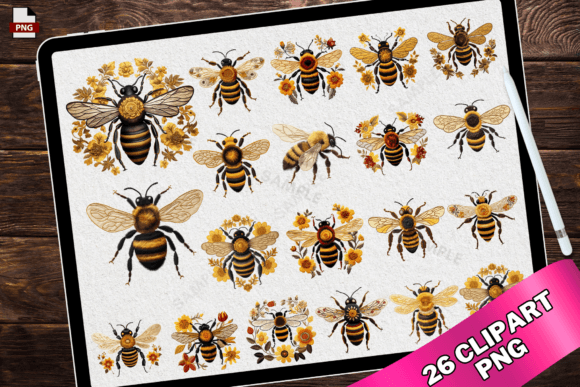
When I opened the Embroidery Honey Bee PNG Clipart pack, my first thought wasn’t “cute”—it was “workable.” That’s rare. So many bee-themed graphics lean into whimsy at the expense of stitchability: too many fine antennae, overwrought wings, or tiny legs that vanish under thread. This set avoids that trap. The 26 files balance charm with clarity—rounded bodies, gentle wing outlines, friendly eyes, and just enough detail to read as honey bee without demanding micro-stitch precision. The transparent background means no clipping drama; it drops cleanly into design software, mockup templates, or embroidery digitizing tools. It feels like a design made *for makers*, not just for screens.
Real Project Test: A Custom Embroidered Tote for a Local Bakery
Last week, I used one of the medium-sized bees from the Embroidery Honey Bee PNG Clipart pack to create a custom tote bag for a neighborhood sourdough bakery. We stitched it on natural canvas, centered above their logo, using matte cotton thread. The result? Clean, confident, and unmistakably handmade—not overly polished, but full of warmth. Customers paused at the counter to point at the bee. That’s the quiet power of this design: it reads well at 3–4 inches wide, holds its shape in satin and fill stitch, and doesn’t compete with fabric texture. It’s the kind of detail that makes a small shop product feel intentional, not generic.
Where It Shines—and Where to Pause
The Embroidery Honey Bee PNG Clipart works beautifully on stable, medium-weight fabrics: denim aprons, cotton tea towels, structured pillow covers, baby onesies, and unstructured sweatshirts. On smooth surfaces like twill caps or structured tote fronts, the bee’s silhouette stays crisp. Its moderate detail level translates reliably into running stitch for outlines and balanced fill stitch for the body—no excessive density that risks puckering or thread breakage.
That said, use caution on highly textured fabrics (like bouclé or thick terry), stretchy knits (unless stabilized heavily), or dark garments where subtle wing gradients might mute. Tiny versions—under 1.5 inches—lose leg definition and wing separation. And while the bee reads well on curved surfaces like baseball caps, avoid placing it right over seams or deep crowns unless you’ve tested hoop placement and fabric pull first.
Smart Pairings for Your Craft Business
- Personalized gifts: Pair with monogrammed initials on linen napkins or baby blankets—this bee adds gentle theme without overwhelming.
- Etsy listings: Use the cleanest file variants for digital embroidery file previews, printable mockups, or layered junk journal kits.
- Boutique merchandise: Scale up for embroidered patches on denim jackets or scale down for delicate applique on nursery wall hangings.
- Holiday & wedding gifts: Works especially well for spring showers, garden parties, or honey-themed wedding favors—just pair with muted gold or sage thread for elevated tone.
What This Design Says About Your Brand—Before a Single Stitch
In handmade markets, customers don’t just buy products—they buy intention. When your tote bag features the Embroidery Honey Bee PNG Clipart, it signals care in curation. Not “I grabbed the first bee I found,” but “I chose something clear, cohesive, and quietly thoughtful.” That builds trust. It also supports brand consistency: whether you’re selling embroidered kitchen towels on Etsy or custom patches at a craft fair, this design adapts without diluting your voice. It’s versatile enough for playful branding (think kids’ apparel or sticker sheets) yet refined enough for boutique home goods or wedding stationery add-ons.
Practical Designer Notes Before You Stitch
- Always test on scrap fabric first—especially if stitching on blends, knits, or textured weaves. Note how wing edges hold up and whether the body fills evenly.
- Check thread color contrast early. Bees read best when body and wings differ slightly in tone—try mustard + cream, charcoal + oat, or navy + ecru.
- Review stitch density in your digitized version. If converting the PNG to a machine embroidery design, avoid overloading small areas like antennae or wing veins.
- Confirm hoop size compatibility. The original files are high-res PNGs—not embroidery files—so digitizing is required for machine use. Don’t assume auto-digitize will preserve clarity.
- Inspect small details at 200% zoom. Make sure wing outlines and eye shapes remain distinct when scaled down for baby embroidery or cap front placement.
- Test black-and-white mockups to gauge visual weight on light vs. dark fabric backgrounds.
- Use appropriate stabilizer—light cutaway for knits, tear-away for stable wovens, and optional topping for looped textures like towels.
- Verify licensing before commercial use. Since this is listed as Graphics in the Illustrations category, confirm whether resale of finished embroidered items or redistribution of digitized versions is permitted.
Final Thought: A Quietly Reliable Asset
The Embroidery Honey Bee PNG Clipart won’t shout—but it will hold space. It’s not flashy, but it’s dependable. For the Etsy seller launching her first line of embroidered tea towels, the small business owner refreshing seasonal aprons, or the hobbyist making personalized baby gifts, this pack delivers what matters most: clarity, flexibility, and quiet professionalism. It’s the kind of design that disappears into your product—until someone smiles, points, and says, “I love that little bee.” That’s the mark of good embroidery design: it serves the project, honors the craft, and connects with people—without needing to explain itself.