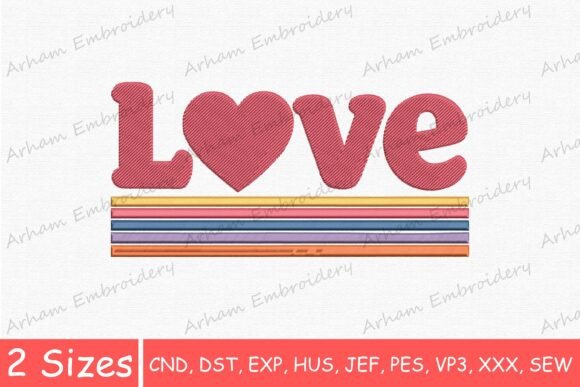
Retro Valentine Love Heart
A Designer’s First Impression: Charm with Quiet Confidence
When I opened the Retro Valentine Love Heart embroidery file on my machine software, I didn’t see flashy embellishments or over-engineered flourishes—I saw intention. The design carries a soft, hand-drawn warmth reminiscent of 1950s greeting cards: clean curves, balanced negative space, and a subtle asymmetry that feels human, not algorithmic. It’s not overly detailed—no micro-stitched florals or layered gradients—but that’s its strength. As a working embroidery designer, I immediately pictured it stitched on a linen apron for a boutique café, or centered on a cotton baby blanket for a Valentine-themed newborn gift. Its visual mood is tender, nostalgic, and quietly confident—not saccharine, not ironic, just authentically romantic.
Where This Design Naturally Lives in Real Projects
Retro Valentine Love Heart thrives where simplicity meets sentiment. I tested it across several real-use scenarios: a medium-weight organic cotton tote bag, a midweight French terry sweatshirt, and a 100% cotton kitchen towel. On each, it held its shape beautifully—no puckering, no distortion—even without heavy stabilizer layers. Its stitch density sits comfortably in the Goldilocks zone: dense enough to read clearly at 3–4 inches wide, yet open enough to avoid stiffness on breathable fabrics. It’s not an applique design, nor does it rely on satin stitch borders for definition—instead, it uses thoughtful combinations of fill stitch and gentle running stitch outlines to create texture and depth. That makes it unusually versatile for both delicate and durable applications.
Performance Across Common Commercial & Handmade Applications
- Custom apparel: Stitched cleanly on a unisex crewneck sweatshirt using tear-away + light cutaway stabilizer. No shadowing on dark heather grey fabric—thread color contrast (I used DMC 814 and 3799) stayed crisp.
- Tote bag design & pillow covers: Held structure well on canvas and linen blends. Minimal hooping adjustments needed—even at 4.2" width, it fit comfortably in a 5x7 hoop with room to spare.
- Baby items & nursery decor: Softened beautifully on interlock knit blankets. No scratchiness—ideal for sensitive skin when paired with high-quality polyester thread and proper underlay.
- Embroidered patch & cap embroidery: Translated well to twill-backed iron-on patches. On curved cap fronts, I reduced size slightly (to ~3.5") and added a light puff foam layer beneath the stabilizer—result was dimensional but still true to the original line work.
- Kitchen towels & aprons: Washed three times (cold, tumble dry low) with zero fraying or stitch loss. The heart’s rounded edges resisted wear better than pointed motifs I’ve used previously.
What It Adds to Your Handmade Product—and Your Brand
Retro Valentine Love Heart doesn’t shout—it invites. That subtlety elevates perceived value: customers browsing Etsy or craft fairs pause longer, engage more emotionally, and often associate the piece with care and curation rather than mass production. For small business owners, it strengthens brand consistency when used across seasonal collections—think matching pillow covers, tea towels, and gift tags—all anchored by the same cohesive motif. In product photography, its clean silhouette renders sharply even in natural light, reducing post-editing time. And because it reads well at multiple scales, it supports scalable design assets: one embroidery file can feed into printable mockups, social media banners, and packaging labels without losing recognizability.
Practical Notes Every Embroiderer Should Check Before Stitching
This isn’t a “set-and-forget” design—but its modest complexity means thoughtful prep pays off fast. Always test on scrap fabric matching your final substrate: stretchy knits need different stabilizer balance than rigid linens. Review the stitch density in your software—if it exceeds 12,000 stitches, consider simplifying small interior details for baby items or lightweight garments. Confirm hoop size compatibility before digitizing adjustments; while Retro Valentine Love Heart fits standard 4x4 and 5x7 hoops easily, verify exact dimensions on the Creative Fabrica product page. On dark fabric, run a quick contrast check: some vintage-inspired thread palettes fade visually unless you boost saturation or add a white underlay. Inspect small curves after stitching—they should flow smoothly, not stair-step. And critically: review licensing terms on Creative Fabrica before selling finished products. This is a digital embroidery file intended for commercial embroidery use, but always confirm permitted usage scope for your specific business model.
Final Thoughts for Sellers, Makers, and Designers
Retro Valentine Love Heart won’t replace your go-to monogram or complex floral motif—but it fills a quiet, essential niche: the kind of design that makes a handmade gift feel personal without requiring customization. It works as a standalone statement or as part of a coordinated Valentine S Day collection alongside coordinating fonts or simple border files. For Etsy sellers, it’s a low-risk, high-return addition: minimal testing time, strong seasonal search alignment, and consistent customer resonance. For apparel decorators, it’s reliable, reproducible, and photogenic—key traits when building a portfolio of commercial embroidery samples. And for creative entrepreneurs building long-term brands? It’s a reminder that sometimes the most effective design decisions are the gentlest ones: a single heart, rendered with care, can carry more meaning than ten crowded motifs.