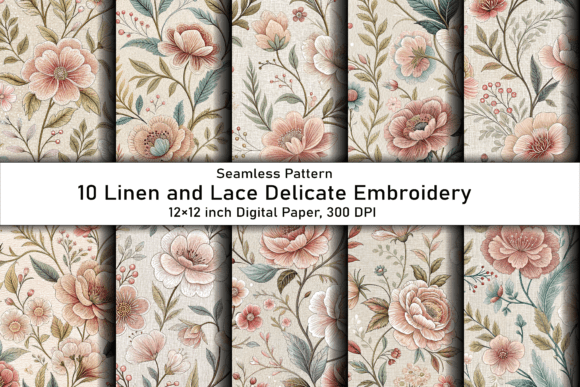
Linen and Lace Delicate Embroidery
A Timeless Whisper on Modern Apparel
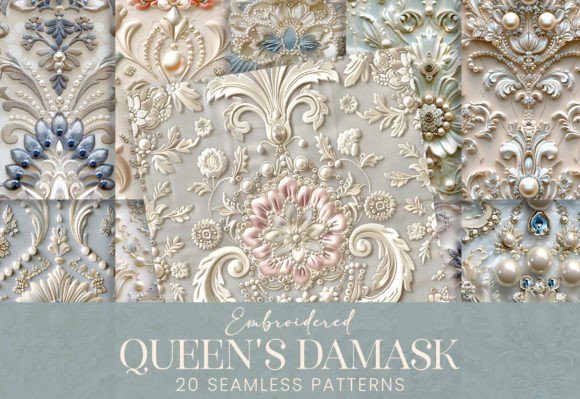
As an embroidery designer who’s stitched for boutique brands, Etsy sellers, and small clothing labels for over twelve years, I approach every new Creative Fabrica embroidery collection with equal parts curiosity and caution. When I first opened Linen and Lace Delicate Embroidery, what struck me wasn’t just the prettiness—it was the intentionality. These aren’t busy filler patterns; they’re ten seamless, high-resolution digital papers rooted in vintage sensibility but built for today’s apparel workflow. The visual personality is quietly feminine—think heirloom linen napkins, antique lace trim, and soft botanical motifs—not fussy, not overly romantic, but undeniably premium. The stitching mood is light and airy: fine line work, gentle curves, open negative space, and subtle texture that reads as hand-drawn rather than algorithm-generated. It feels classic, not trendy—meaning it won’t date your boutique brand next season.
How Linen and Lace Delicate Embroidery Translates to Real Garments
I tested several patterns from the set across a range of apparel types—all common touchpoints for small shop product development. On neutral sweatshirts (heather grey, oatmeal, cream), the delicacy shines without disappearing. The motifs hold their shape beautifully at chest placement—no overcrowding, no visual weight. For pastel hoodies (dusty rose, mint, lavender), the vintage tone adds warmth and cohesion, especially when paired with tonal thread colors. On dark garments—navy fleece, charcoal French terry—the contrast becomes unexpectedly elegant, provided you choose matte or slightly heathered thread to avoid glare.
Sleeve accents? Yes—especially the smaller-scale patterns. A single motif placed just above the cuff on an oversized hoodie reads like intentional design, not afterthought. Back designs benefit from the seamless nature: two or three repeats flow naturally across shoulder blades or down the spine, ideal for lifestyle product photos and printable mockups. T-shirt embroidery works best on mid-weight cotton or poly-cotton blends—avoid ultra-thin blanks where stitch density could cause puckering. Denim jackets welcome the contrast: a tiny Linen and Lace Delicate Embroidery motif near the collar or pocket edge elevates casual wear with quiet sophistication. And for tote bags and cozy seasonal layers (think waffle-knit cardigans or brushed cotton robes), the patterns add tactile storytelling without overwhelming function.
Where Precision Matters Most
This isn’t a “drop-and-stitch” collection—and that’s its strength. Because Linen and Lace Delicate Embroidery leans into detail and openness, placement and stabilization require thoughtful decisions. Small chest placement demands tight hoop alignment and lightweight tear-away stabilizer—too much backing dulls the airiness. Dense stitch areas are minimal by design, but always inspect individual files for overlapping elements before scaling. On stretchy fabric (ribbed knits, lightweight French terry), use cutaway + topping combo to preserve clarity. Fleece and heavy loopback sweatshirts need extra hooping care: float the top layer, avoid over-tightening, and test stitch density—some motifs read better at 85–90% scale on plush surfaces.
Curved surfaces (like sleeve caps or rounded hems) call for repositioning the motif to follow natural drape—not forcing symmetry. Tiny lettering isn’t part of this set (it’s purely Patterns and Graphics), so don’t expect monogram integration unless layered manually. And while the motifs feel delicate, they’re resilient in execution—if digitized well and stitched with quality thread.
Building Brand Value, One Stitch at a Time
For a boutique brand or handmade product line, Linen and Lace Delicate Embroidery does more than decorate—it communicates. That whisper of vintage elegance signals attention to detail, care in curation, and respect for materiality. Customers browsing Etsy listings or Instagram feeds subconsciously associate that aesthetic with craftsmanship and intentionality—boosting perceived value and buyer trust. Visually, it supports consistency across collections: imagine matching sweatshirt embroidery, tote bag graphics, and social media banners all pulled from the same cohesive set. That kind of harmony strengthens product recognition and makes your small shop product instantly identifiable—even without a logo front-and-center.
Practical Notes Every Embroidery Designer Should Check
- Test on scrap fabric first—especially if using unfamiliar garment blanks or thread brands.
- Confirm stabilizer choice based on fabric texture: tear-away for stable knits, cutaway for stretch, topping for napped surfaces.
- Review thread color contrast carefully—soft motifs recede with low-contrast thread; consider matte cotton or rayon for depth.
- Verify hoop size compatibility before digitizing or resizing—some seamless repeats may span larger hoops.
- Inspect stitch density in each file—look for long satin runs or thin jump stitches that may snag on textured fabrics.
- Test on similar garment fabric, not just muslin—fabric movement changes everything.
- Compare placement options digitally and physically: chest, sleeve, back, hem—each tells a different story.
- Check Creative Fabrica product details thoroughly: confirm licensing terms for commercial embroidery, file formats included, and whether the Patterns support your embroidery software’s import workflow.
Final Thought: Less Is Truly More
In a market flooded with bold, maximalist machine embroidery design, Linen and Lace Delicate Embroidery stands out by stepping back. It doesn’t shout—it invites closer looking. For custom apparel makers building a refined, emotionally resonant boutique brand, this set offers quiet authority. It pairs effortlessly with minimalist branding, supports slow-fashion narratives, and elevates even basic blanks into considered finished products. Whether you're designing for your own Etsy shop, prepping a small-batch hoodie drop, or sourcing graphics for client merchandise, these ten seamless patterns earn their place in a professional embroidery file library—not as filler, but as foundation.